
INITIALIZING FIELD DIAGNOSTICOK
LOADING PILOT PROFILE // ADJUSTEROK
CALIBRATING LOAD SENSORSOK
MAPPING POCKET INDEX // 10 NODESOK
0%
INITIALIZING FIELD DIAGNOSTICOK
LOADING PILOT PROFILE // ADJUSTEROK
CALIBRATING LOAD SENSORSOK
MAPPING POCKET INDEX // 10 NODESOK
0%
Phase 1 // Pre-order // Founder pricing
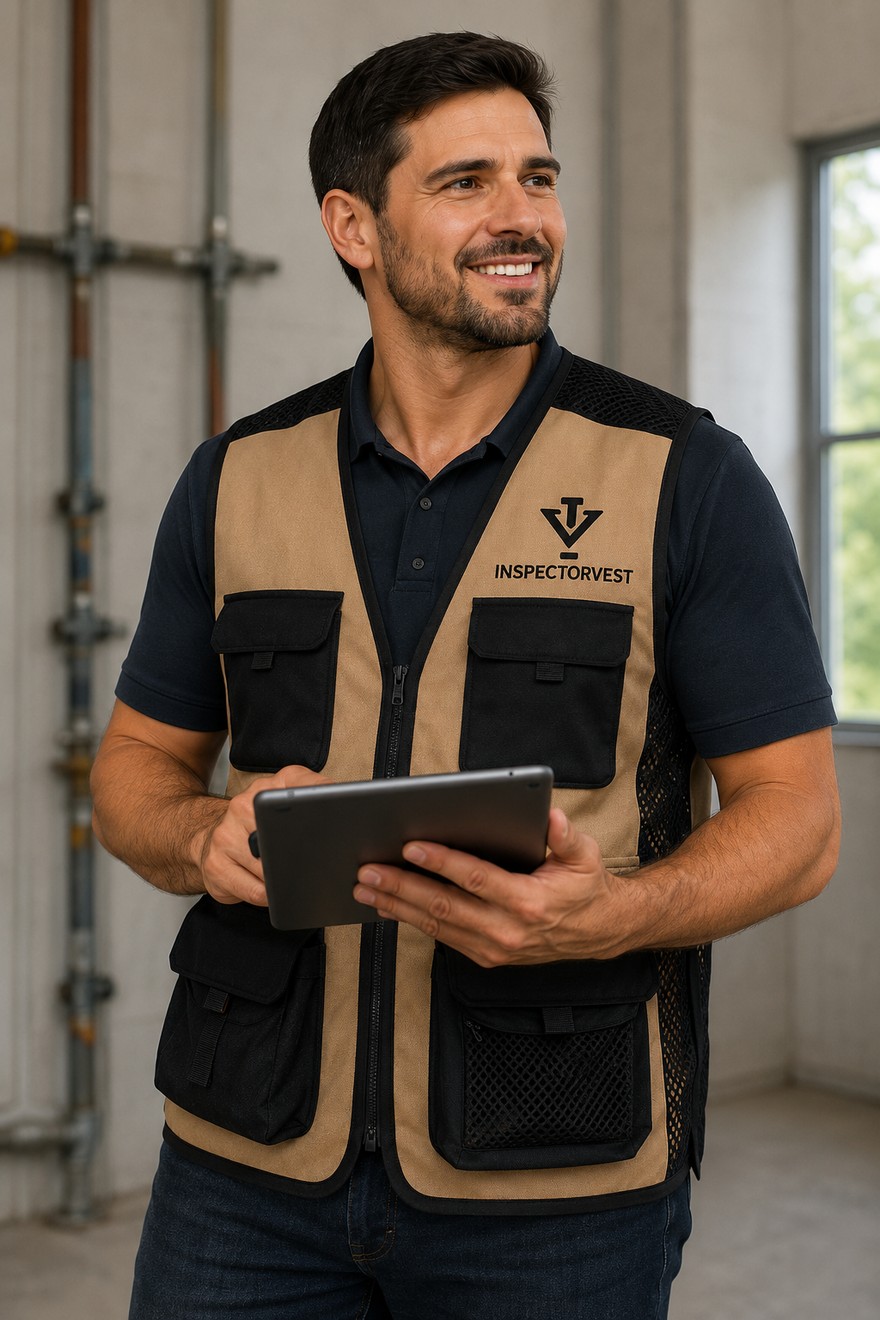
The first tool vest engineered for inspectors to wear on site. Every instrument in the same spot on every job, so you reach without looking, close the file faster, and never walk back to the truck for the one thing you left there.
Made in the USA // built by American workers
Scroll to run the diagnostic
[ Field data // where the weight goes ]
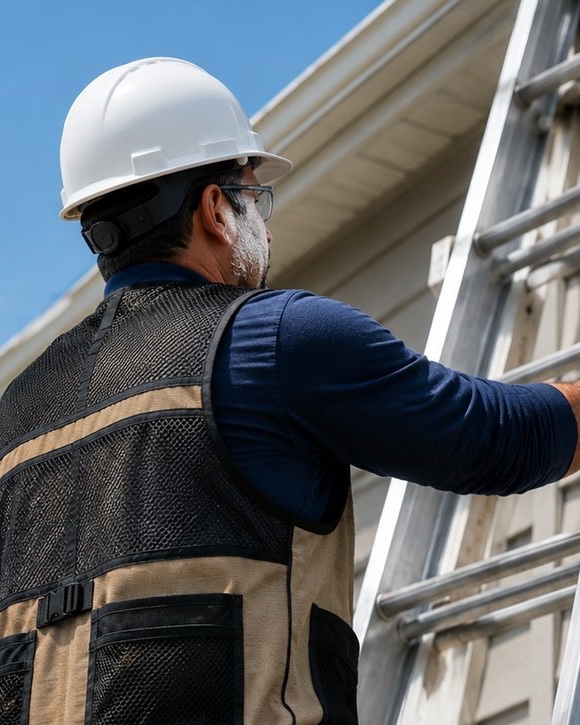 Load spread // padded shoulders + torso
A carpenter vest drops 20 pounds of nail bags onto your hips. Inspectors carry light, dense instruments. The fix is not less gear. It is spreading the load evenly across padded shoulders and the torso — breathable, balanced, and off your lumbar spine — instead of hanging it off your belt.
0hrs/wk
Average time an inspector spends on their feet in the field. For approval
0%
Report recurring lower-back or hip strain from belt-carried loads. For approval
0lb
Instruments on a typical full inspection, once belted and pouched. For approval
[ Spec.02 // the other half of the story ]
Inspectors and adjusters get paid per inspection, not per hour. Every minute spent digging through a bag — or driving back for the flashlight you left on a roof — comes straight off your paycheck.
A tool belt fails exactly where you spend your day. It shifts on a roof, snags in a crawlspace, so you unclip it and set your tools down — and that is how they get left behind. The vest gives every tool one spot that never changes. You reach without looking and put it back without thinking.
25hours back, per 100 houses
15 min per job
× 100 houses on a storm deployment
= 1,500 minutes
= 25 hours
Two and a half extra 10-hour days per 100 houses. On a three-week deployment, half a week back.
[ What the 15 minutes is made of ]
Which is why 15 is the conservative number, not the optimistic one. Swap in our timed figure
[ Sensitivity // the case does not depend on the best case ]
If it is really 10 min a job
16.7
hours saved per 100 houses. Still better than a day and a half back.
At 15 min a job
25.0
hours saved per 100 houses. Two and a half ten-hour days.
If it is really 20 min a job
33.3
hours saved per 100 houses. More than three full days.
Run it on your own numbers
Illustrative // nothing here is a promise
[ And most of the year is not storm ]
Three jobs a day, 15 minutes each: 150 to 180 hours a year, per inspector. On a five-person crew, more than a hundred working days.
45 min/day
× 240 working days
= 180 hours — call it 150
More inspections per week, less back pain at the end of them.
[ Spec.03 // every pocket, documented ]
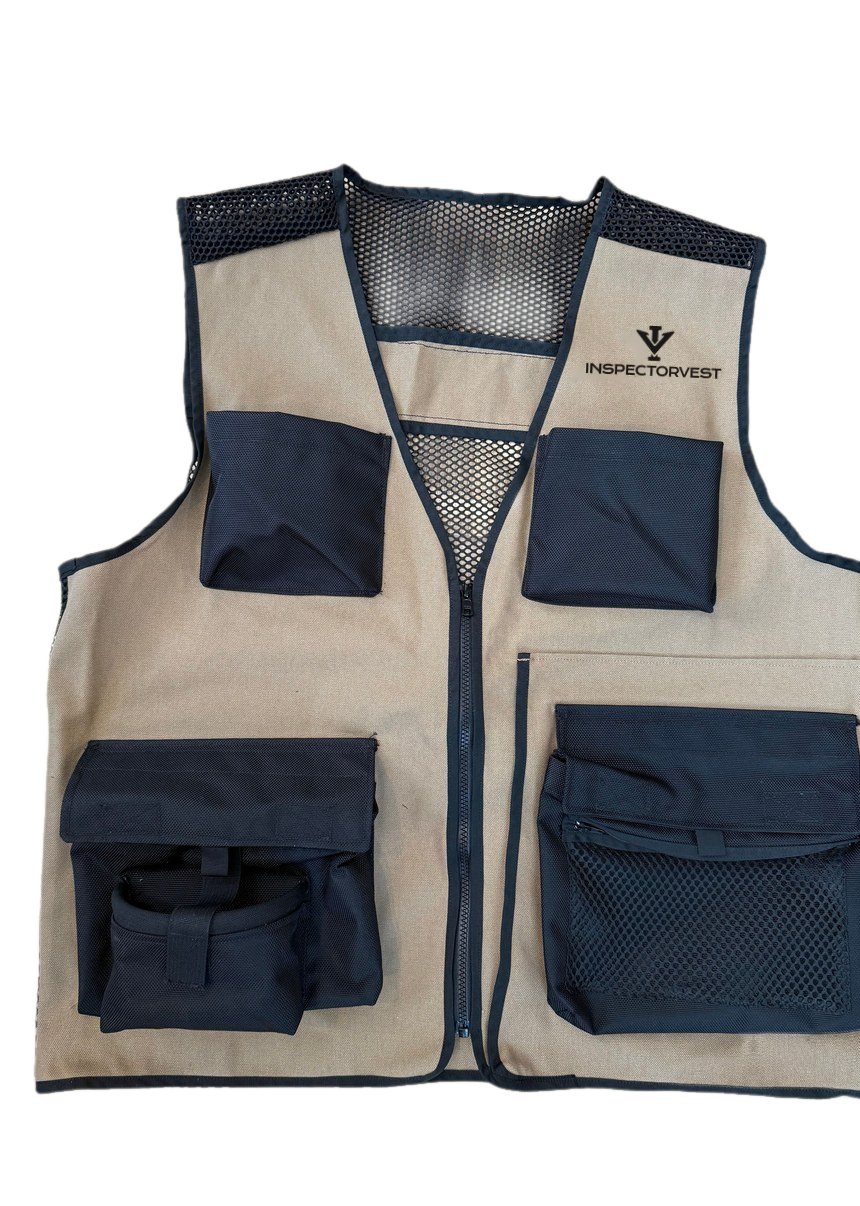
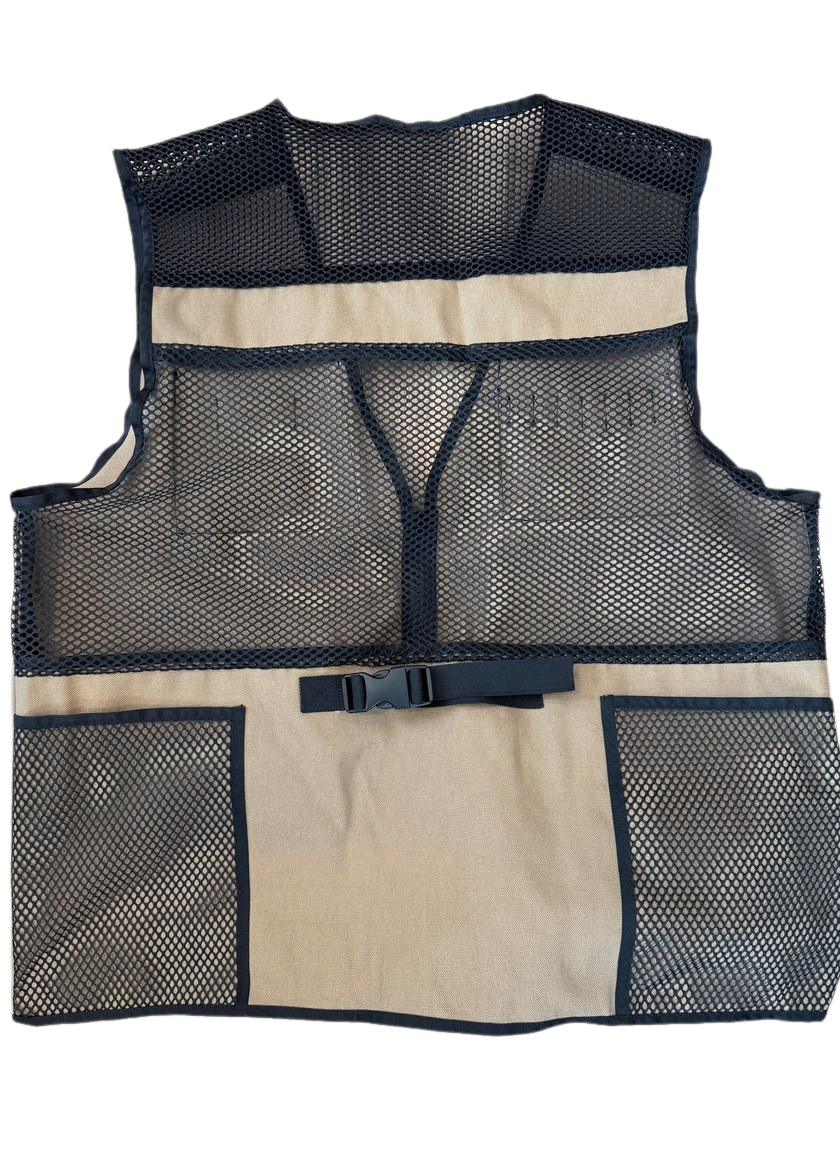
POCKET 06
> Padded, breathable, load-bearing
Padded and breathable, so it never cooks. The shoulder and torso harness spreads the load evenly rather than stacking it on one point, which is exactly why it stays comfortable through the last inspection of the day.
[ What we have in mind for it ]
Interior shot // to be photographed
Tap a node to read the pocket
[ The launch build ]
Hi-Vis version coming soon.
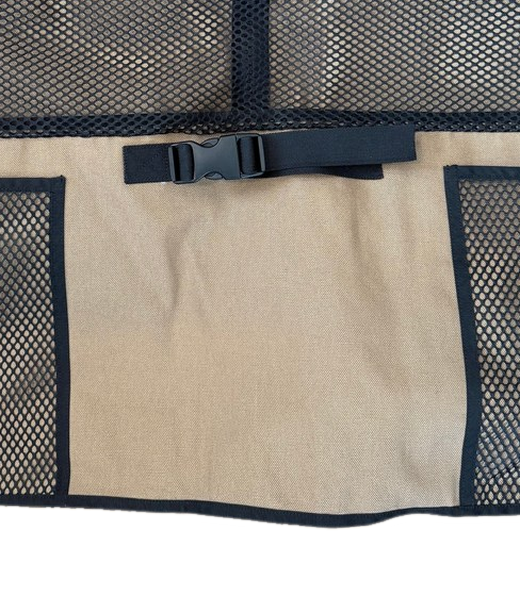
Reserve the Field[ Build // construction, up close ]
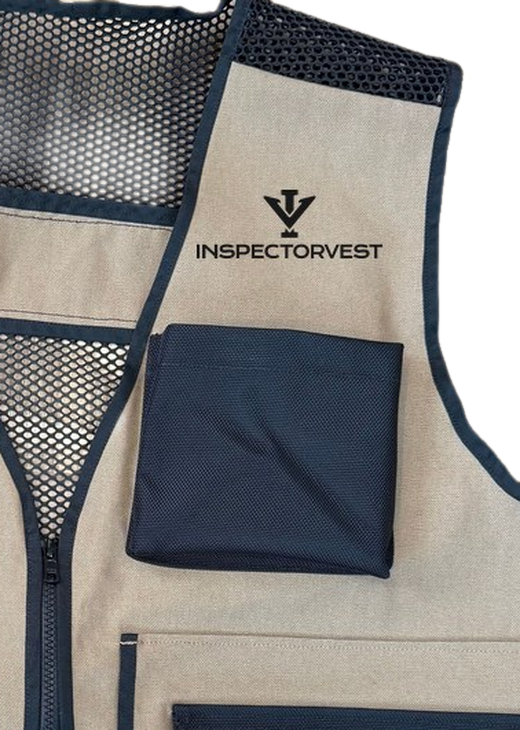
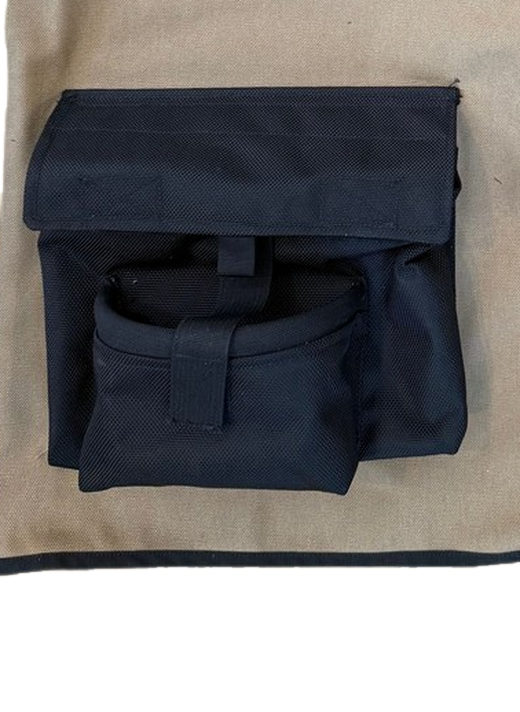
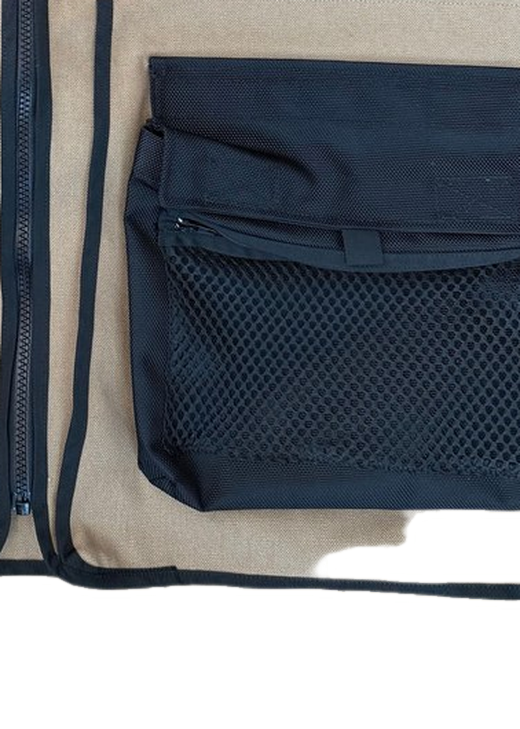
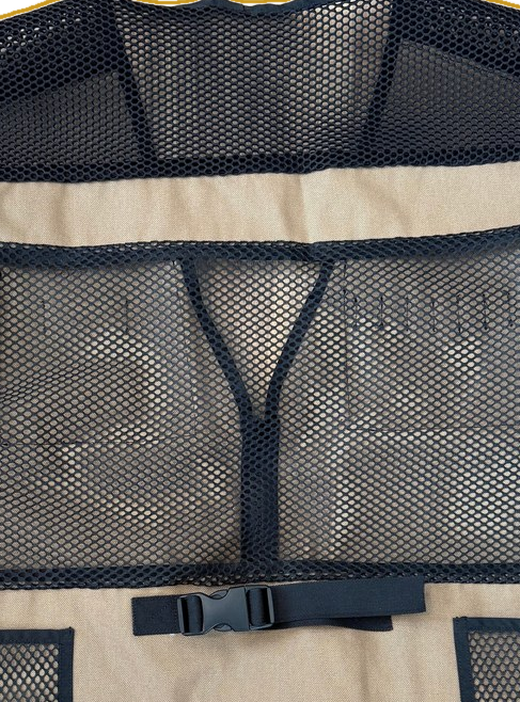
[ Spec.04 // one platform, four rigs ]
A belt built for roof work is the wrong tool in a crawl space, so adjusters end up owning three or four setups and burning time swapping between them at every stop. InspectorVest makes the vest the platform: it goes on at 7 a.m. and comes off at 5 p.m. What changes is the rig attached to it.
It carries the load across your shoulders and torso instead of hanging it off your lumbar spine. It identifies you as the professional the moment a homeowner opens the door. It is comfortable enough to drive in, so it never has to come off between sites. And it is the same recognisable silhouette whether you are on a roof, in an attic, or on your belly under a floor joist.
Low profile by design, so nothing catches a ladder rung or a rake edge. Harness-compatible, with attachment points that sit clear of a D-ring. Tethered tool loops so a pitch gauge or a shingle lifter does not roll off a valley. Sized so the camera sits in a chest position you can reach without changing your stance.
Everything sits flat or rides high so you can belly-crawl without pockets digging into your ribs. Wipeable, hose-off materials, because this rig is coming out of a wet crawl space covered in whatever was down there. Nothing dangles and nothing snags on a vapour barrier.
Trimmer and quieter than the field rigs, because this one is worn standing three feet from a homeowner in their living room. Everything you need for a contents walk-through and nothing that reads as heavy equipment.
Laid out so you can work one-handed while the other hand holds a panel cover. Every item lands in the same place every time, which matters most when you are not looking at what you are reaching for.
The lineup can grow. The platform does not change. Rig lineup for approval
[ Why this matters to an adjuster ]
A full gear change costs five to ten minutes on each end — strip the last rig off, dig the right one out of the back, put it on, check it, then reverse all of it when you leave. Run seven stops and you have lost close to an hour standing in driveways. With swappable rigs it is one change at the tailgate.
The seventh inspection gets the same attention as the first, which matters for accuracy and for the quality of the file you turn in.
[ Fleet // outfit the crew ]
For carriers and inspection firms outfitting adjusters and staff inspectors. Volume pricing, carrier co-branding embroidered across the back panel, harness compatibility, and domestic manufacturing.
Spread the load across the whole crew and cut recurring back and hip claims.
A mapped pocket per instrument means less fumbling and fewer re-trips per inspection.
Cut clearance for fall-protection harnesses on steep and roof work.
Your firm or carrier mark embroidered across the back panel. Preview it in the form below.
Secure units ahead of CAT surges so staffing spikes never wait on gear.
Per-unit pricing steps down by team size. Reserve the run now to hold the tier.
Made in the USA // domestic cut and sew
[ Reserve // lock founder pricing ]
No payment today. Lock the $175 founder price and your place in the Phase 1 run.
Confirmed
Check your email. Your founder price is locked and your spot in the Phase 1 run is held.